
What is Kratom?

When I’m out and about, sometimes I see these Kratom products. I haven’t tried Kratom. I don’t know anything about it. What’s it all about?
ChatGPT said:
Kratom is one of those things people see in gas stations or smoke shops and wonder, “What exactly is this stuff?” Here’s the straight, clear, non-medical breakdown so you know what it actually is and why it’s around.
⭐ What Kratom Is
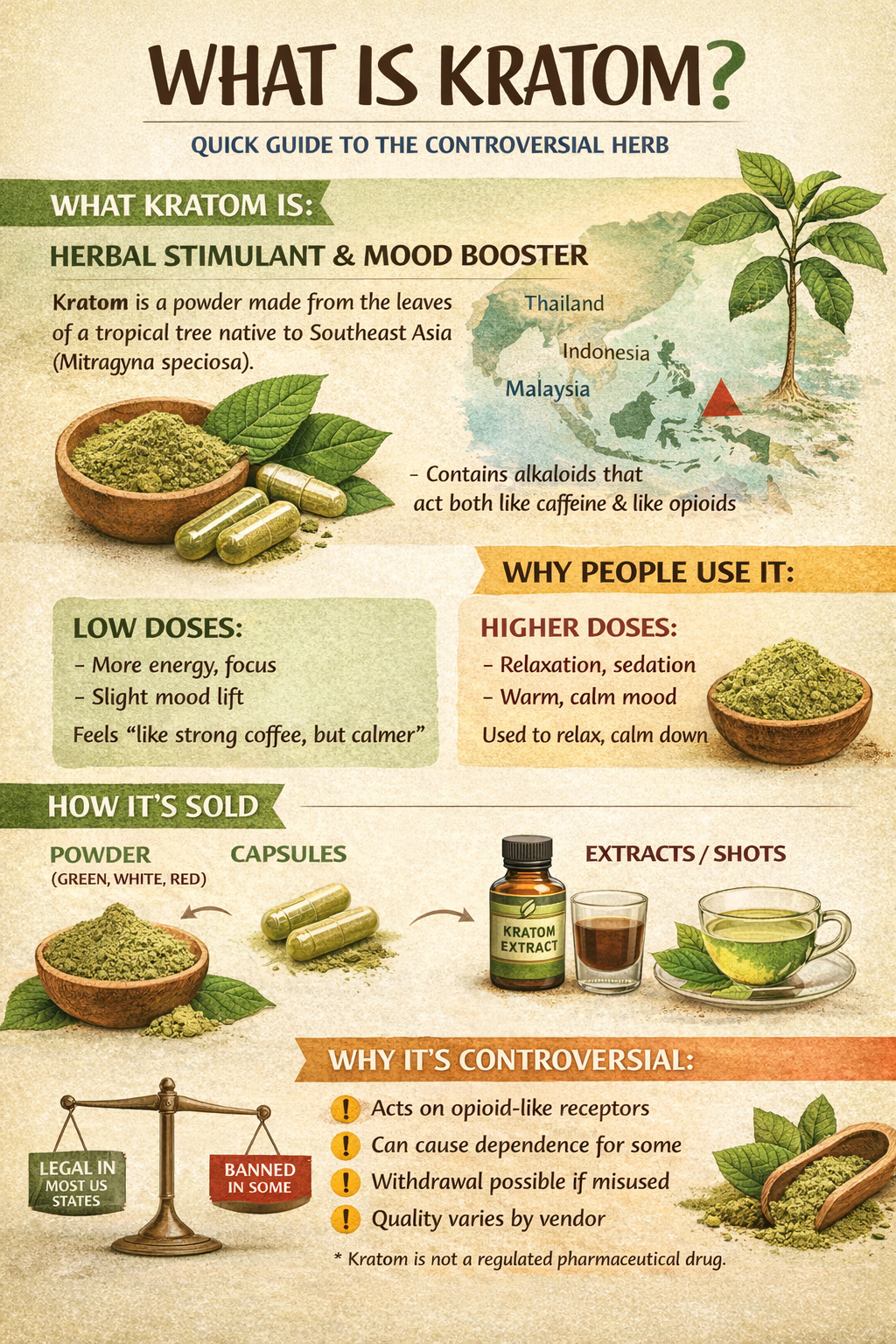
Kratom comes from the leaves of a tropical tree (Mitragyna speciosa) found mainly in Southeast Asia (Thailand, Indonesia, Malaysia). The leaves contain natural compounds (alkaloids) that interact with some of the same receptors targeted by caffeine-like stimulants and by opioid-like substances — which is why it has a “dual personality.”
⭐ Why People Use It
Different doses = very different experiences:
1. Low doses:
- Mild stimulation
- Increased energy
- Slight mood lift
- More focus
This is why some people say it feels “like strong coffee but calmer.”
2. Moderate to higher doses:
- Relaxation
- Reduced physical discomfort
- Calm/euphoria
- Sedation at the highest doses
This is why some people use it for calming down, not for energizing.
⭐ How It’s Sold
You’ll typically see:
- Powders (green, red, white strains)
- Capsules
- Extracts / shots (stronger, concentrated)
- Teas
About strains:
- Green = middle ground; balanced
- White = more stimulating
- Red = more relaxing / sedating
Strain names can be marketing — the real difference is mostly the plant and preparation.
⭐ Why It’s Controversial
Because Kratom acts on opioid-like receptors, even though it's not an opioid itself, it can:
- Be habit-forming for some people
- Cause withdrawal symptoms if used heavily for long periods
- Vary greatly in potency depending on the product
- Sometimes be contaminated when sold by low-quality vendors
It’s legal in many states and banned in a few. The legal status keeps shifting.
⭐ What It Doesn’t Do
- It’s not the same as hard opioids
- It’s not automatically addictive
- It’s not a pharmaceutical drug
- It’s not regulated by the FDA, so quality varies widely
⭐ What People Compare It To
Depending on dose and the person:
- Like coffee but calmer
- Like kava but more energizing
- Like a mild pain-relief herb
- Like a light sedative (in higher doses)
Everyone reacts differently.
⭐ If you’re just curious what the buzz is about:
Kratom sits in that gray area between:
- Herbal stimulant
- Mood-lifting plant
- Calming / relaxing supplement
Its popularity exploded in the last decade because it’s legal (in most places), easy to buy, and has a reputation for “natural relief” or energy.
If you want, I can also break down:
- The differences between green/red/white strains
- Why gas-station kratom is considered lower quality
- Typical effects timelines
- Safety myths vs facts
- Whether it’s worth trying from a purely informational standpoint
Just tell me what direction you want to go.
You said:
Typical effects timelines
ChatGPT said:
Here’s the typical effects timeline for Kratom — broken down cleanly so you know what usually happens and when.
These timelines are based on capsules or powder, since that's what most people encounter.
⭐ Kratom Effects Timeline (Typical)
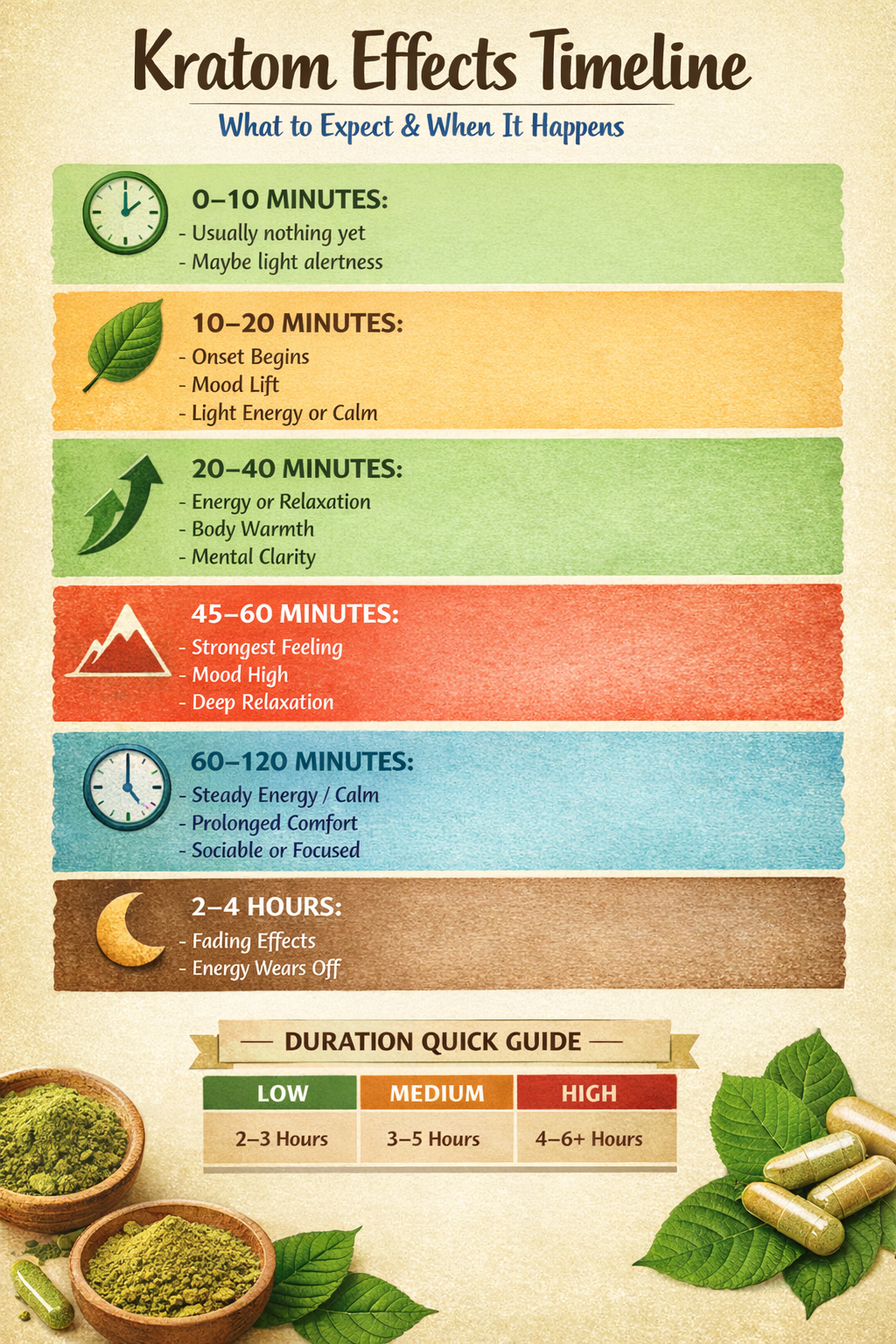
0–10 minutes:
- Usually nothing yet
- Some people notice very light warmth or alertness early if taken on an empty stomach
10–20 minutes: (Onset begins)
Most people start feeling the first effects here:
- Subtle mood lift
- Light stimulation or calm (depends on strain/dose)
- Slight body "warmth"
- Increased mental focus or eased tension
If taken with food, onset may be delayed by 10–20 minutes.
⭐ 20–40 minutes: (Primary lift)
Effects become clear:
Low doses (1–3g)
- Energy increases
- Motivation/drive
- Mental clarity
- Social ease / mood elevation
Moderate doses (3–6g)
- Calm relaxation
- Body comfort
- Balanced energy + calm
- More noticeable mood elevation
Higher doses (6–8g+)
- Much more calm/relaxing
- Heavier body feel
- Mild sedation
- Warm, comfortable mood
⭐ 45–60 minutes: (Peak effects)
This is the strongest point for most people.
During the peak:
- Mood enhancement is highest
- Calm or energy (depending on strain) is most consistent
- Physical relaxation is strongest
- Any side effects (nausea, dizziness) also appear here if they will
⭐ 60–120 minutes: (Sustained effects)
The plateau — effects level off but remain noticeable.
Typical sensations:
- Smooth energy (if white/green strain)
- Steady relaxation/comfort (if red strain)
- More emotional clarity or contentment
- Increased sociability or quiet focus
⭐ 2–4 hours: (Gradual decline)
Effects start tapering off slowly.
- Energy calms down
- Relaxation becomes softer
- Mood-enhancement fades
- Some mild fatigue may appear as it wears off
⭐ 4–6 hours: (End of effects)
Most effects are gone by now.
- Baseline returns
- Some people feel light aftereffects (calm or slight tiredness)
- Higher doses last longer; lower doses fade sooner
⭐ Fast vs. Slow Onset Differences
Faster onset if:
- Taken on an empty stomach
- Powder mixed with water (fastest)
- You’re a lighter person
- You used a white or green strain
Slower onset if:
- Capsules (they need to dissolve)
- You ate within the last 1–2 hours
- Red strain
- Naturally slow metabolism
Capsules can take 10–20 minutes longer than powder.
⭐ How Long It Lasts, Summarized
| Dose | Onset | Peak | Fade-out | Total Duration |
|---|---|---|---|---|
| Low (1–3g) | 10–20m | 30–60m | 1–2h | 2–3 hours |
| Medium (3–6g) | 15–25m | 45–90m | 2–3h | 3–5 hours |
| High (6–8g+) | 20–30m | 1–2h | 3–4h | 4–6+ hours |
If you want, Captain, I can also break down:
- Effects by strain (white/green/red)
- What people mean when they call something “stimmy” vs “sedating”
- Why gas-station kratom hits differently from vendor kratom
- How kratom compares to caffeine, kava, or CBD in timelines
Just say the word.
You said:
make a pintrest style infographic for my blogpost
ChatGPT said:
You said:
I was more expecting you to make an info-graphic that portrays the earlier part of the conversation, when you answered me after I asked, when I asked What is Kratom?
Please make that infographic